
Margaret King Moore, Lady Mount Cashell, alias Mrs Mason (1773–1835)
Nicoletta Caputo (University of Pisa)
Margaret King Moore, Lady Mount Cashell, was an Irish noblewoman who, after separating from her husband and seven children in 1805, settled in Pisa in 1814 with her new partner, George William Tighe. They adopted the names of Mr and Mrs Mason and took up residence in Casa Silva, located in Via Mala Gonella - identified by some as the current Via Sancasciani, and by others as the adjacent Via Pietro Gori (Curreli 1997b, p. 320). Mrs Mason was a figure of considerable importance in the local cultural and social scene, as confirmed by the fact that she and her partner attended the elegant soirees and dance evenings of the city’s primary social institution: the Casino dei Nobili (Panajia 1996, pp. 209-13). In October 1827, she even refounded the “Accademia dei Lunatici”, hosting its meetings in her new home in Via San Lorenzo (Ricci and Panajia 1997, pp. 321-26, and Curreli 1997a, pp. 105-120), which Giacomo Leopardi attended during his stay in Pisa (from 9 November 1827 to 9 June 1828).
Mrs Mason was the first to welcome the Shelleys when they arrived in the city, along with Claire, in January 1820; actually, the three were the only English people to be admitted into her Pisan entourage. Mrs Mason was variously connected to the Shelley family, as Mary’s mother, Mary Wollstonecraft, had been her governess in 1786, albeit only for a single year. Wollstonecraft had drawn inspiration from her for her children’s book, Original Stories from Real Life (1788), in which the fictional projection of the author -the governess of two restless girls - is called, precisely, Mrs Mason. Then, in 1808, Margaret King Moore had published her Stories of Old Daniel, Or, Tales of Wonder and Delight – a highly successful volume that enjoyed many subsequent editions – through the Juvenile Library, the publishing house that Mary Shelley’s father, William Godwin, had founded with his second wife. In 1820, Godwin’s firm issued Mrs Mason’s Continuation of the Stories of Old Daniel: Or Tales of Wonder and Delight, which was inspired, as the subtitle informs us, by her travels: Containing narratives of foreign countries and manners, and designed as an introduction to the study of voyages, travels, and history in general.
The Shelleys had met Mrs Mason a few months before settling in Pisa, specifically on 30 September 1819, when, on their way from Livorno to Florence, they stopped in the city and came to visit her with a letter of introduction from Godwin (M. Shelley 1987, p. 298). It was she who subsequently found the Shelleys a house on the Lungarno (Casa Frassi) - a task made easier because, as Mrs Mason explained in a letter to Mary, the unusually harsh winter had drastically reduced the number of foreigners in Pisa – English families, in particular, had dropped from thirty-five to just five, leaving many apartments available at lower prices than the previous year (McAleer 1958, p. 140). This cultured and unconventional Irish lady was the Shelleys' only acquaintance during the early days of their stay in the city and they met almost daily.
Mrs Mason’s company was much appreciated by Percy, as evident from a letter he wrote to Leigh Hunt on 5 April 1820:
We see no one but an Irish lady and her husband, who are settled here. She is everything that is amiable and wise, and he is very agreeable. […] some lady of 45, very unprejudiced and philosophical, who has entered deeply into the best and selectest spirit of the age; with enchanting manners. (P. B. Shelley 1964, p. 110)
With this “amiable and wise” lady, Shelley could even discuss the Irish question, a subject that had deeply engaged him in the past. Indeed, he had authored three pamphlets on the topic and, from February to April 1812, had stayed in Dublin with his first wife, Harriet Westbrook, to personally support the cause of Catholic emancipation. Several years earlier, Lady Mount Cashell had likewise published, anonymously, three pamphlets against the Act of Union between Great Britain and Ireland, which was enacted in 1800: A Few Words in Favour of Ireland (1799), A Hint to the Inhabitants of Ireland (1799) and Reply to a Ministerial Pamphlet (1800). According to Percy’s cousin, Thomas Medwin, it was she who inspired the poet's 1820 poem “The Sensitive Plant” (Medwin 1913, p. 265). As for Mary, it was to the elder of Mr and Mrs Mason’s two daughters, Laurette Tighe, that the writer dedicated her children’s novelette Maurice or the Fisher’s Cot in August 1820.
Mrs Mason, however, became particularly attached to Claire Clairmont, who considered the Irish lady her “Minerva”. In fact, Claire’s mother, Mrs Godwin, had turned to her old acquaintance when, on 28 July 1814, Claire left England with her half-sister Mary and Percy Shelley. Mrs Godwin asked Mrs Mason to protect her daughter should the fugitives go to Pisa; specifically, she was expected to convince Claire to leave Shelley (McAleer 1958, p. 129). On that occasion, the group did not reach Italy, but the Irish noblewoman fulfilled her task years later, when the Shelleys settled in Pisa, and she was able to encourage Claire to break away from the couple and gain her own independence by seeking work as a governess. In October 1820, Mrs Mason also secured her a position in Florence – in the household of Professor Antonio Boiti, physician to Grand Duke Ferdinand III of Lorraine – a job that Claire, however, left at the end of her month’s trial (McAleer 1958, pp. 153–55). Furthermore, when Claire moved to Vienna to join her brother Charles after Percy's death, Mrs Mason helped her financially. In addition, unbeknownst to either George Tighe or Mary, she wrote twice to Lord Byron (whom she had never met), unsuccessfully appealing to him for financial assistance for the mother of his late daughter, Allegra (McAleer 1958, pp. 173–77).
Finally, as evident from the letters Mrs Mason wrote to the Shelleys during their months in Florence at the end of 1819, it was she who advised Percy to consult the illustrious Dr Vaccà for his kidney ailments. Once the Shelleys arrived in Pisa, the poet and the physician developed a deep friendship, fostered by a strong ideological affinity and shared values. Mrs Mason herself held a keen interest in medicine and had even opened a dispensary for the poor in Pisa. In 1823, she published a highly successful medical guide, Advice to Young Mothers on the Physical Education of Children, by a Grandmother, which was reprinted many times and translated into several languages. In addition to translating medical treatises from German, in 1824 she also published a two-volume novel, The Sisters of Nansfield: A Tale for Young Women.
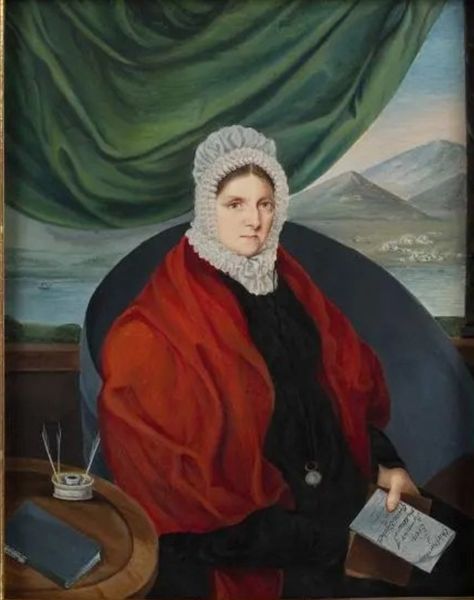
Jane Diana King, Margaret King Moore (New York Public Library Digital Collection, Wikimedia Commons)
Works Cited
Curreli, Mario, Una certa Signora Mason. Romantici inglesi a Pisa ai tempi di Leopardi, Pisa, Edizioni ETS, 1997a.
Curreli, Mario, “Lady Mountcashell alias Madame Mason”, in Leopardi a Pisa, a cura di Fiorenza Ceragioli, Milano, Electa, 1997b, pp. 306-320.
McAleer, Edward C., The Sensitive Plant: A Life of Lady Mount Cashell, Chapel Hill, The University of North Carolina Press, 1958.
Medwin, Thomas, The Life of Percy Bysshe Shelley, ed. Harry Buxton Forman, London, Oxford University Press, 1913.
Panajia, Alessandro, Il Casino dei Nobili. Famiglie illustri, viaggiatori mondanità a Pisa tra Sette e Ottocento, Pisa, Edizioni ETS, 1996.
Panajia, Alessandro, “La nuova Accademia dei Lunatici” in Leopardi a Pisa, a cura di Fiorenza Ceragioli, Milano, Electa, 1997, pp. 322-26.
Panajia, Alessandro, “Casino dei Nobili. Storia e microstorie”, in Il Casino dei Nobili, a cura di Fabrizio Sainati e Alessandro Panajia, Pisa, Edizioni ETS, 2021, pp. 41-72.
Ricci, Fulvia, “La prima Accademia dei Lunatici”, in Leopardi a Pisa, a cura di Fiorenza Ceragioli, Milano, Electa, 1997, p. 321.
Salvetti, Lucia, Il Casino dei nobili di Pisa nei secoli XVIII e XIX, Pisa, Pacini Editore, 1993.
Shelley, Mary, The Letters of Mary Wollstonecraft Shelley, vol. 1, ed. Betty T. Bennett, Baltimore and London, The Johns Hopkins University Press, 1980.
Shelley, Mary, The Journals of Mary Shelley, vol. 1: 1814-1822, eds Paula R. Feldman and Diana Scott-Kilvert, Oxford, Clarendon Press, 1987.
Shelley, Percy Bysshe, The Letters of Percy Bysshe Shelley, vol. 2, ed. Frederick L. Jones, Oxford, Clarendon Press, 1964.
Nicoletta Caputo, December 2025
All the English translations from Italian are by the author of the present essay
Ultimo aggiornamento
21.09.2026